There's a version of EEAT that gets treated as a compliance exercise. Add author bios, get a few backlinks, tick the boxes, move on. It's understandable that Google's quality guidelines can feel abstract, and when there's a list of things to action, it's tempting to work through it and call it done.
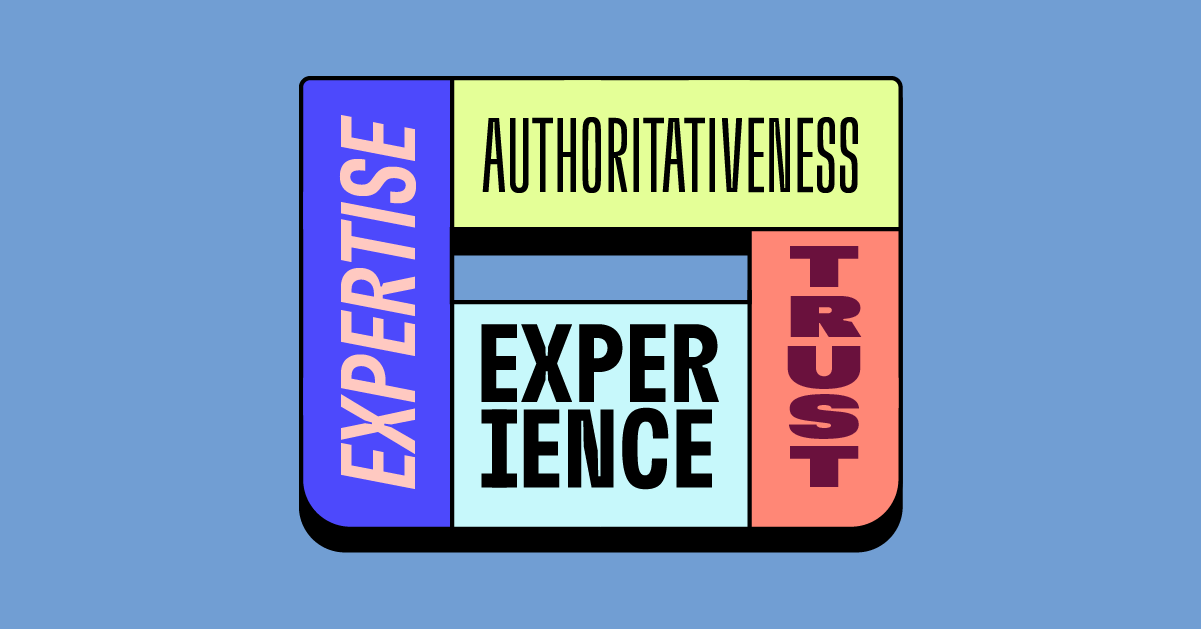
But EEAT: Experience, Expertise, Authoritativeness, and Trustworthiness, was designed to answer a more fundamental question: is this a website that a real person, with real knowledge, actually stands behind? In B2B, that question matters more than most marketers realise.
Why EEAT hits differently in B2B
B2B buying decisions take time. Multiple people are usually involved, the stakes are higher, and the research phase is longer. Before anyone books a call or fills in a form, they've almost certainly spent time on your website forming a view of whether you know what you're talking about.
EEAT is essentially a framework for whether your website earns that trust, not just in the eyes of Google, but in the eyes of the people you're trying to reach. A site that demonstrates genuine expertise converts better, not just ranks better.
What does EEAT actually look like in practice?
It's less about individual tactics and more about the overall impression your website creates. A few things that contribute to it:
Experience and Expertise show up in the quality and depth of your content. A single well-written article that takes a clear position and backs it up will do more for your EEAT than ten shallow posts optimised around keywords. Author attribution matters here, too. Content that's clearly written or reviewed by someone with genuine credentials carries more weight than content that seems to come from nowhere.
Authoritativeness is built over time through consistency of point of view, quality of the sources you reference, and the external signals that point back to your site, mentions, links, and citations from credible sources in your industry.
Trustworthiness is the most straightforward. Clear contact details, transparent pricing or process information, real client names and case studies, privacy policies that are actually findable. These feel like table stakes, but they're often missing or buried.
The lead gen connection
It's worth being direct about why this matters beyond search rankings. A website that demonstrates EEAT gives prospects more reasons to stay, more reasons to engage, and more confidence to take the next step.
In B2B, the website often handles a lot of the qualification work before anyone speaks to sales. If it doesn't convey credibility, that work doesn't happen. You get traffic that doesn't convert, or worse, prospects who visit once and quietly decide you're not the right fit.
Getting EEAT right is as much a conversion strategy as it is an SEO one.
Why EEAT needs to be a build decision, not an afterthought
This is where many businesses run into difficulty. EEAT isn't something you can reliably bolt on after a site is live. The decisions that support it, how content is structured, how authorship is handled, how schema markup is applied, and how internal linking works are architectural. They're much easier to get right at the build stage than to retrofit later.
The same applies to the content strategy that sits behind the site. If your website is built around thin pages with no clear point of view, adding author bios won't fix it. The structure needs to support depth and credibility from the start.
This is one of the reasons we think about EEAT early in any website project, particularly for businesses moving onto HubSpot. The platform has good native support for the things EEAT requires: structured content, author properties, and the ability to personalise and update content without relying on a developer every time. But those capabilities are most useful when they're planned for, not discovered halfway through a build.
How do I start improving EEAT?
If you want a quick read on where your current site stands, ask yourself these three questions:
- If a sceptical buyer spent 10 minutes on your website, would they leave confident that your team genuinely knows this space?
- Is it clear who is behind your content, and why their perspective is worth reading?
- Does your site make it easy for someone to find the information they need to make a decision, or does it funnel everyone toward a demo regardless of where they are?
If the honest answer to any of those is uncertain, it's worth looking at what your website is actually communicating and whether it's working as hard as it could be.
Let's start the conversation. We're happy to take a look with you.